

Mixing different shades of green for bridesmaid dresses looks incredibly easy on Pinterest. Pick sage, olive, emerald, maybe a little forest green, and you are done.
In reality, green is one of those colors where it is surprisingly easy to create a group that does not look “beautifully mismatched,” but instead looks as though every bridesmaid was given a completely different brief. For me, the biggest difference comes down to one thing: do not try to match shade names; match the mood of the colors instead.
Two dresses can both be sold as “sage green” and still look completely different next to each other. One may have a cool grey undertone, while the other leans much more yellow. You might barely notice it on separate product pages, but you will notice it immediately in a group wedding photo.
Start With One Main Green
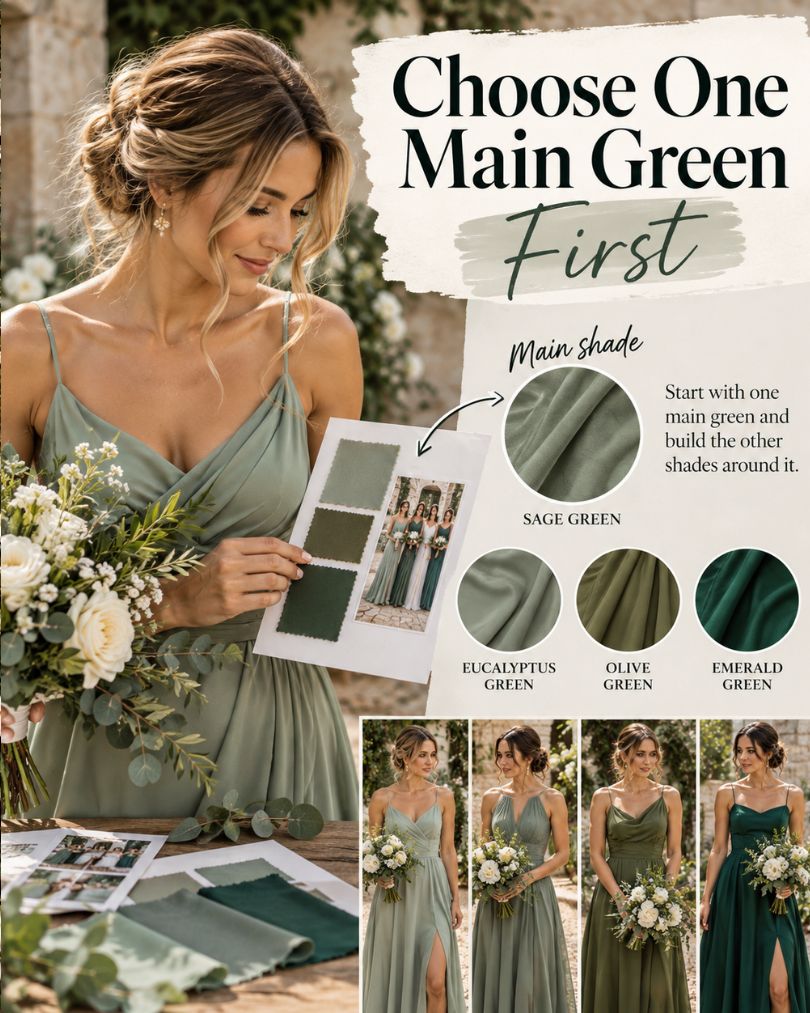
If I were planning green bridesmaid dresses, I would not start by choosing five different shades. I would first pick one main green and build everything else around it.
That could be sage green for a softer look, olive for something more earthy, emerald for a richer and more elegant palette, or forest green for a darker fall or winter wedding. Once that main color is clear, it becomes much easier to decide which other greens actually belong next to it.
This is much safer than simply telling everyone to “choose a green dress.” Green has an enormous range, and without any boundaries you can easily end up with pale mint next to dark emerald and a bright grassy green. Each dress may be beautiful on its own. Together, they may not make sense at all.
Not Every Green Automatically Works With Every Other Green
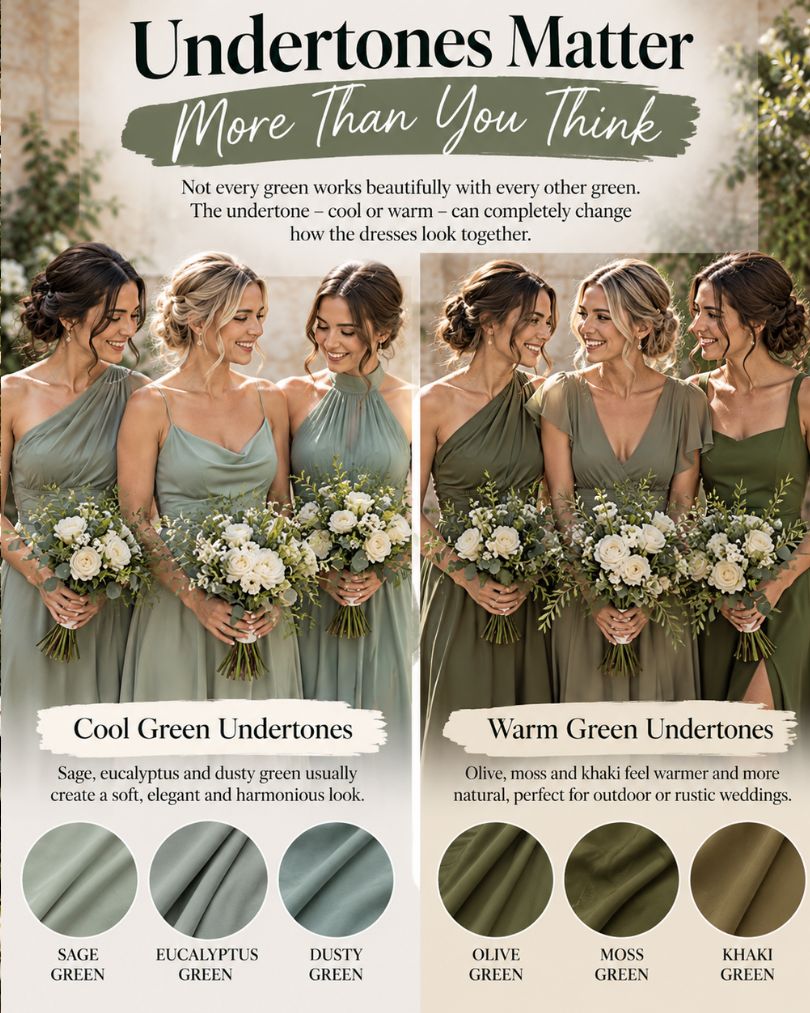
This is probably the biggest mistake I see with mismatched green bridesmaid dresses. Green is not just green.
Some shades have a lot of blue in them, while others are warmer and lean toward yellow or brown. That undertone often decides whether the dresses look intentionally coordinated or accidentally mixed.
Sage, eucalyptus and dusty green usually create a softer, muted group. Olive, moss and khaki tend to feel warmer and more natural. Emerald, hunter and forest green are deeper, richer and more formal.
I would personally be careful about mixing a very cool blue-green with a strongly yellow olive. Both can look beautiful in isolation, but once they are standing next to each other they can start competing rather than complementing each other.
Three Shades Often Look Better Than Six
When people hear “mismatched bridesmaid dresses,” they often assume that more variation automatically looks more interesting. I actually think the opposite is often true.
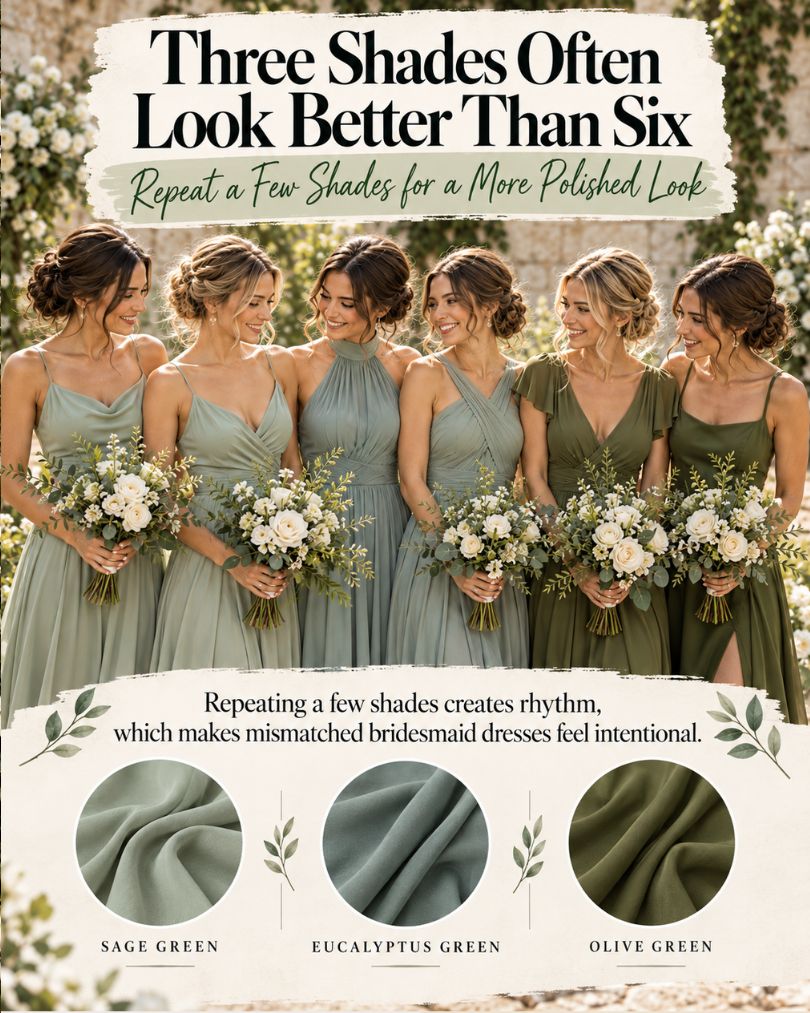
If you have six bridesmaids, you do not need six different shades of green. In many cases, it looks much more polished to choose three shades and repeat them.
For example, you could do two sage dresses, two eucalyptus dresses and two olive dresses. The group still feels varied, but now there is rhythm. Your eye notices that the colors repeat, so the whole look feels intentional rather than random.
This is one of those small details that rarely gets explained in simple Pinterest inspiration posts, but it can make a huge difference in the final photographs.
Think About How the Shades Will Be Arranged
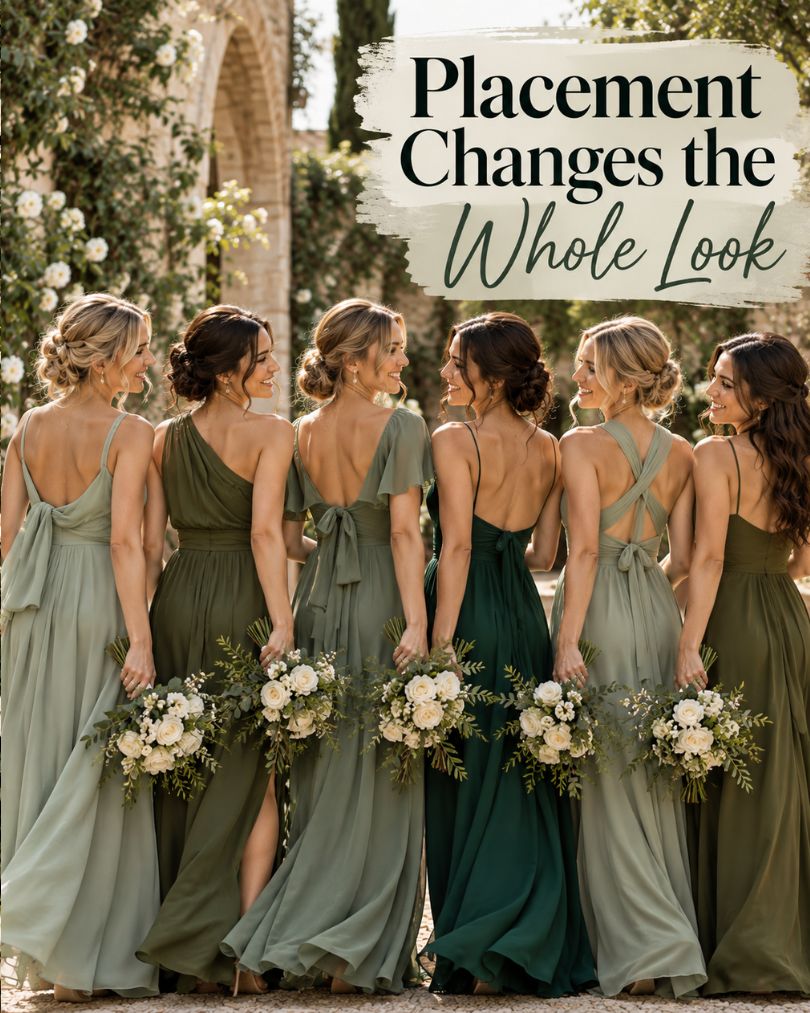
If the bridesmaids are standing together, I would not place all the darkest dresses on one side and the lightest dresses on the other. I would mix them visually instead.
For example, sage – forest – olive – sage – emerald – olive can feel more natural than putting all the pale shades first and all the dark shades at the end.
It sounds like a tiny detail, but it matters in group photos. And I would think about photography almost as much as the dresses themselves. Bridesmaids will not spend the entire wedding standing in one perfect line. They will be sitting together, walking in pairs, standing in smaller groups and appearing in candid photos throughout the day.
The colors should therefore work not only as one large group, but also in random pairs and groups of three.
I Would Not Obsess Over Matching Fabrics
When all bridesmaid dresses are the exact same color, a difference between satin and chiffon can be very obvious.
With mismatched green dresses, I actually do not mind a little variation in texture. Sometimes it even helps. Satin reflects light very differently from matte chiffon, so two similar shades of green can look intentionally different rather than like a failed attempt at matching exactly.
I would still be careful not to vary absolutely everything at once. If you already have many different shades, completely different cuts and several different fabrics, the result can start feeling too busy.
Mismatched still needs some kind of rule.
Give Bridesmaids a Palette, Not Just a Color Name
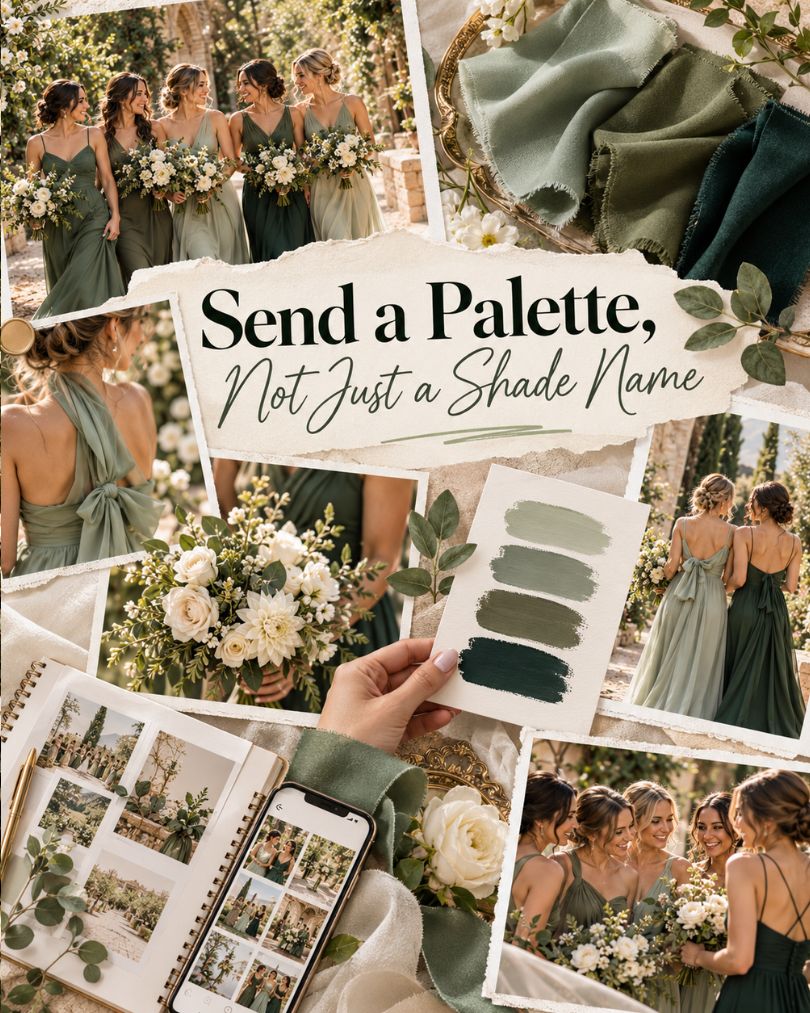
If I were the bride, I would not simply send a message saying, “Buy something in sage green.”
I would send a small color palette with three or four specific shades instead, ideally with screenshots of dresses or fabric swatches.
The reason is simple: color names are not standardized between brands. One shop may call a grey-green shade “eucalyptus,” while another brand uses the same name for something much brighter.
If every bridesmaid is shopping somewhere different, a shared visual reference is much more reliable than the name of the color.
Be Careful With Online Photos
I would take this part seriously. The color you see on your screen is not always the color the dress will be in real life.
Sage green is probably one of the trickiest shades to buy online because on one screen it can look soft and grey, while on another it can look almost pistachio.
If all the dresses come from the same brand, this becomes easier. If everyone is buying from different stores, I would at least compare photos taken in natural daylight.
Fabric swatches are even better if the brand offers them. Yes, it is one more small thing to organize, but when these dresses will appear next to each other in dozens of wedding photos, I think it is worth doing.
A Simple Formula That Usually Works
If you do not want to overthink the whole palette, I would stick to three levels: light green, medium green and dark green.
For example, sage + olive + forest green. Or eucalyptus + moss + emerald.
This gives you depth and contrast, but it still feels obvious that all the dresses belong to the same color family.
And I would not spend too much time trying to find five shades that are only slightly different from each other. Sometimes it is actually much easier to mix a pale sage with a dark forest green than to find three almost identical sage dresses.
When the colors are clearly different, the contrast looks intentional. When they are almost the same but not quite, it can look like a mistake.
READ MORE:
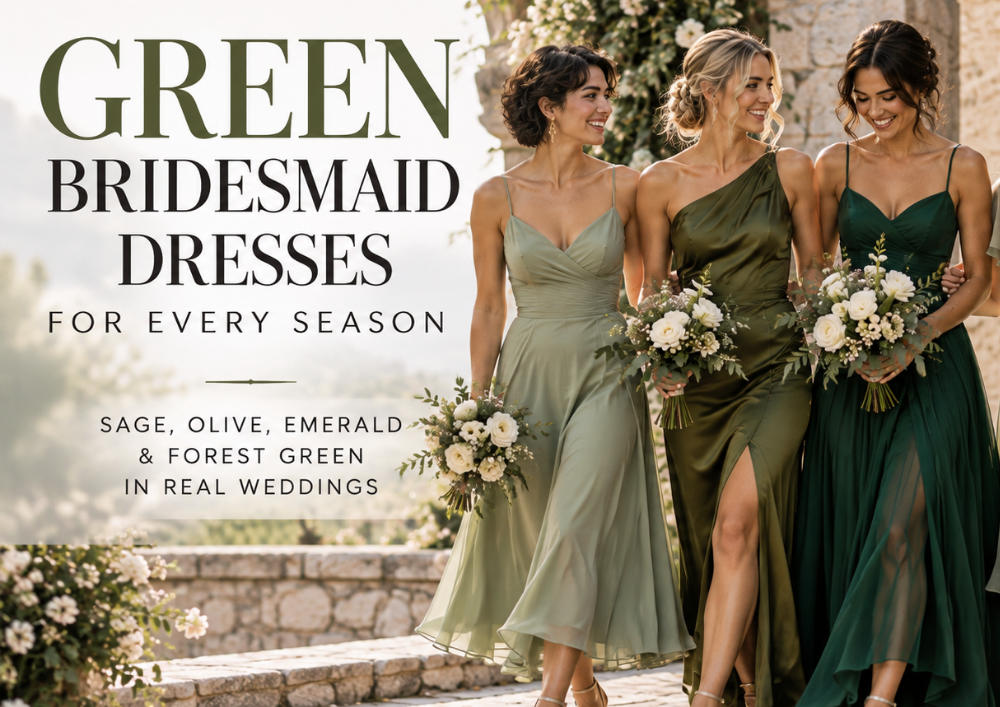
Green Bridesmaid Dresses: How to Choose the Right Shade for Your Wedding
Flowers Can Pull the Whole Palette Together
If the dresses already come in several shades of green, I would keep the bouquets relatively simple.
White, ivory or cream flowers can connect different greens beautifully without introducing another strong competing color. With a softer sage palette, blush can also work very well.
With emerald or forest green, I personally prefer cream or white flowers because the dresses already carry enough visual weight on their own.
I think the same rule applies here as it does with outfits in general: when one part of the look is already interesting, five other things do not need to fight for attention.
What I Would Not Do
I would not allow every bridesmaid to choose absolutely any shade of green without checking it first.
I would not mix pastel mint with a very earthy olive just because both happen to belong to the green family.
And most importantly, I would not try too hard to create an exact match between dresses from different stores.
If you want identical dresses, buy the same color from the same brand. If you want mismatched bridesmaid dresses, allow the colors to be genuinely different.
The most difficult version is often the middle ground: five dresses that are all trying to be the same green, but every one of them is slightly off.
My Favorite Green Bridesmaid Color Combinations
For a soft spring wedding, I would choose sage + eucalyptus + dusty green.
For a garden or outdoor wedding, I love olive + moss + sage.
For a more elegant fall wedding, I would combine olive + forest green + emerald.
And for a winter wedding, I would happily keep it even simpler with emerald + forest green, add cream flowers and stop there.
5 Green Wedding Day Ideas for Inspiration
1.Romantic Garden Green Wedding
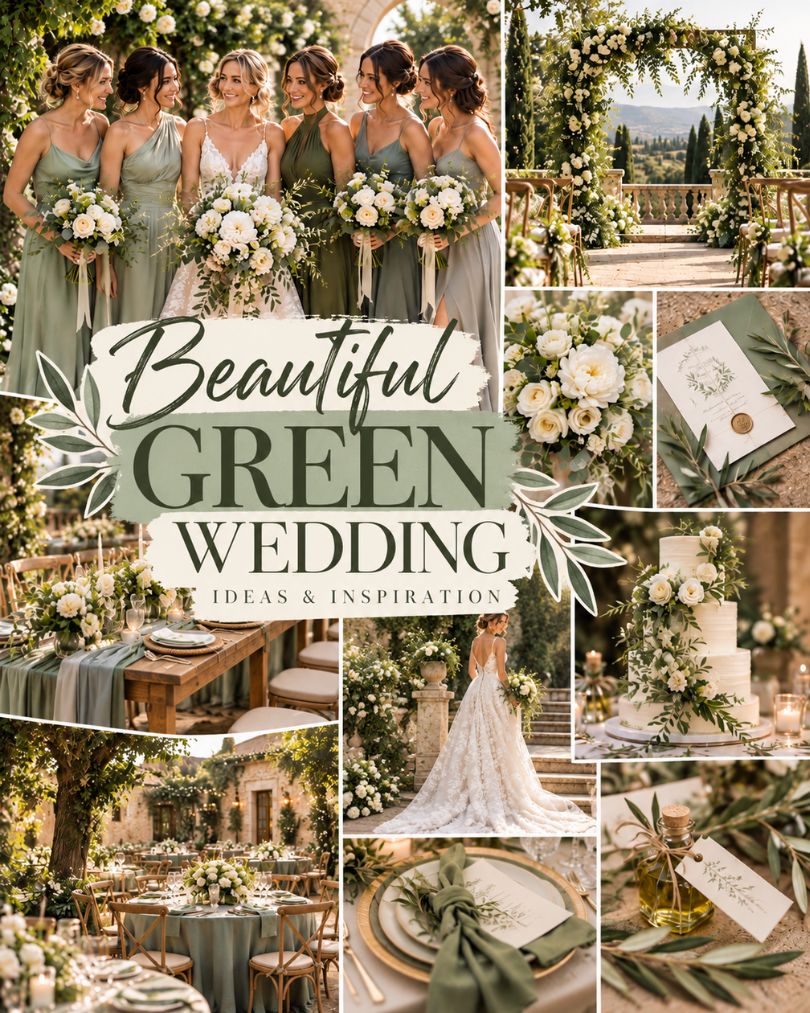
A soft garden-style green wedding works especially well when you want the whole day to feel elegant without becoming too formal. The trick is to keep the green palette slightly muted and let ivory, cream and warm neutral details soften it. This kind of styling is also very forgiving in photographs, because sage and eucalyptus tones usually look beautiful in both bright daylight and softer evening light.
If I were planning this type of wedding, I would avoid adding too many extra colors. A small amount of gold, warm wood or natural stone is enough. The green already does most of the work, and adding blush, blue and burgundy on top can quickly make the palette feel less calm.
2. Luxury Black-Tie Green Wedding
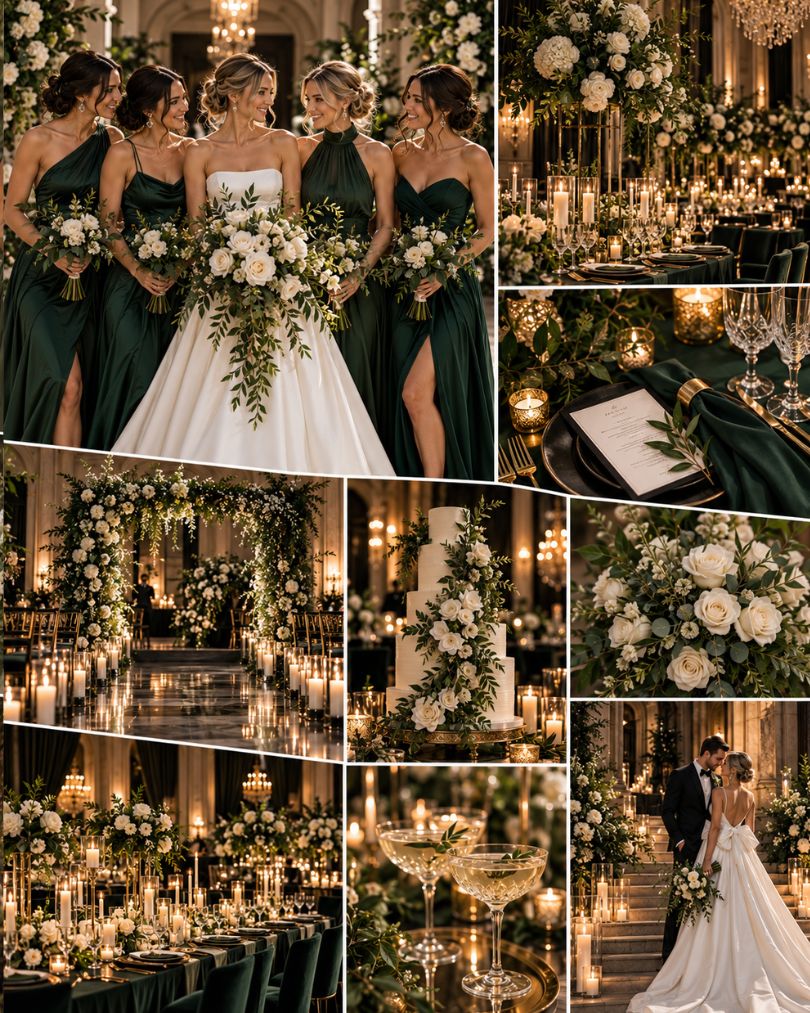
A dark green wedding like this works best when you want the day to feel formal, intimate and expensive rather than soft and airy. Deep emerald and hunter green naturally become more dramatic in evening light, so they are especially effective for winter weddings, late-afternoon ceremonies or receptions that move into candlelight.
What you cannot really tell from a photo is how much restraint helps this kind of palette. If I were styling a wedding like this, I would keep almost everything else simple: white flowers, warm candlelight, black or dark table details and just a little gold. The moment you start adding several extra colors, the whole thing can lose that polished black-tie feeling.
I also think this is one of the better green palettes if bridesmaids are wearing different dress styles. The darker color already creates enough visual unity, so the dresses do not need to match perfectly in neckline or fabric. That gives everyone a little more freedom without making the bridal party look disconnected.
3. Modern City Green Wedding
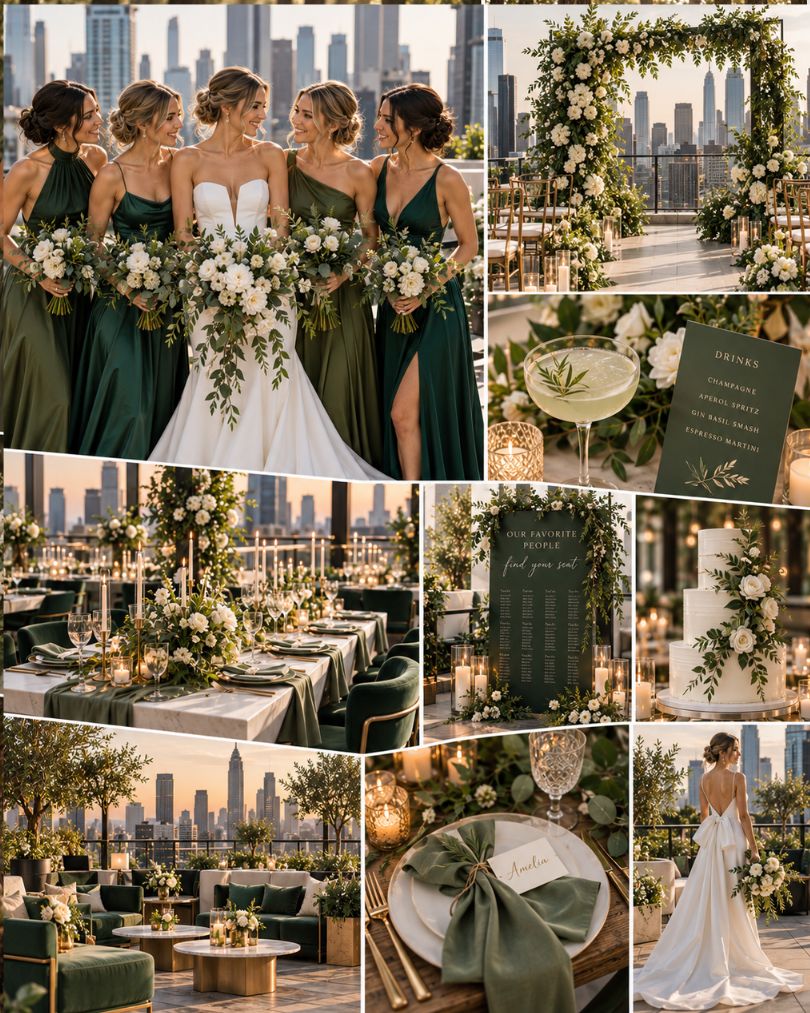
A city wedding with green as the main color works especially well when you want something elegant without making the whole day feel traditional. In an urban setting, I would keep the palette cleaner and more structured than I would for a garden or forest wedding. Deep emerald, muted olive and crisp white usually feel much more intentional here than a large mix of soft pastel greens.
What the photo cannot tell you is that this type of wedding usually depends more on contrast than on decoration. The city skyline, stone, glass and metal already give you a strong background, so you do not need to cover every surface in greenery. A few bold floral arrangements, dark green stationery and well-chosen table details can be enough.
4. Forest Boho Green Wedding
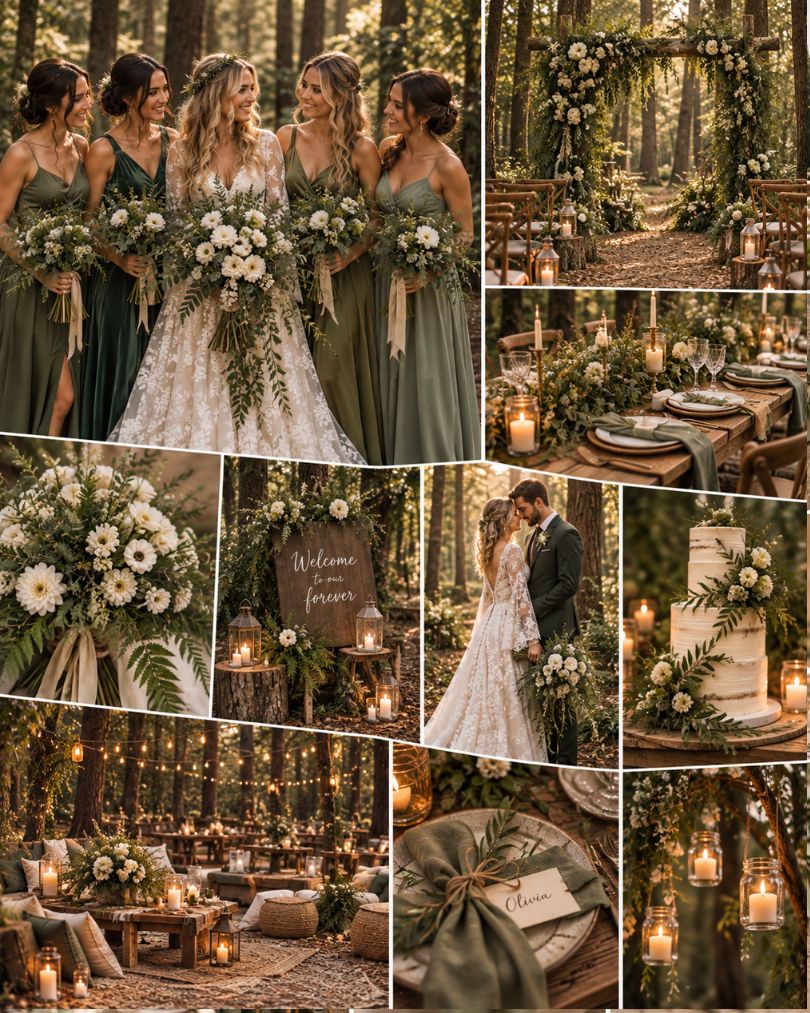
A forest green wedding works beautifully when you want the day to feel intimate, natural and relaxed. Olive, moss and muted forest tones blend easily with the surroundings, while cream details keep the palette from becoming too dark.
I would focus more on texture than perfect matching: linen, wood, soft ribbons, handmade paper and candlelight. That slightly imperfect mix is what gives a woodland wedding its warmth.
5. Mediterranean Green Wedding
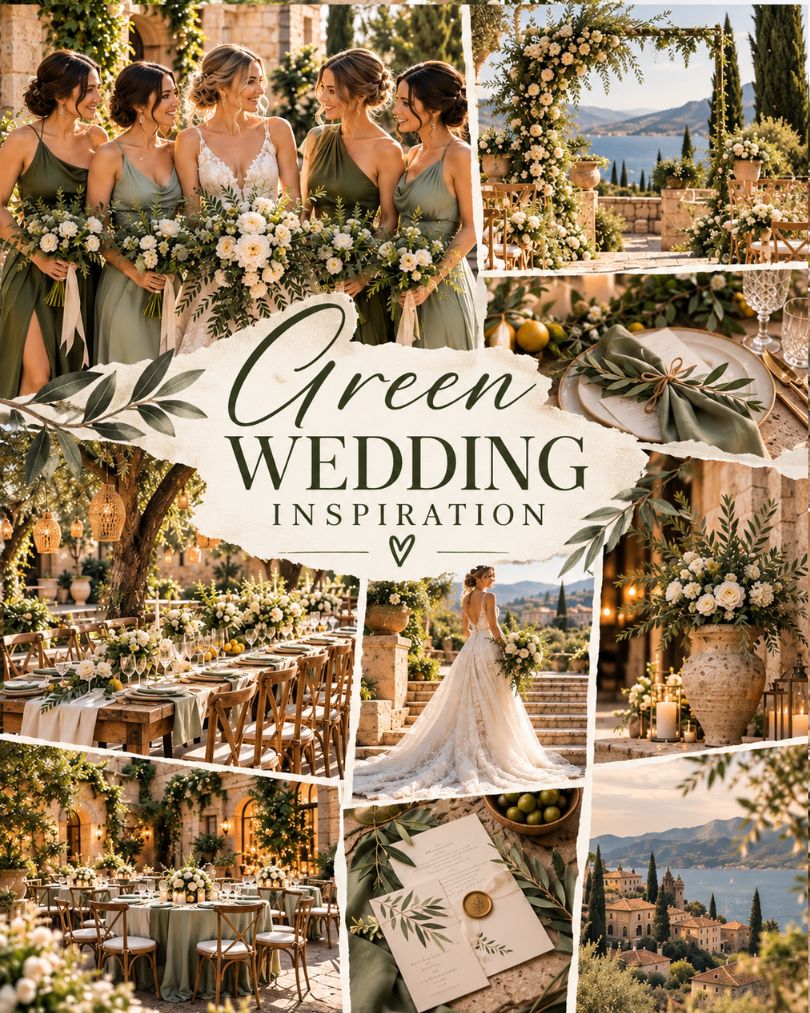
This type of green wedding is perfect if you want the day to feel warm, relaxed and elegant without becoming too formal. Olive and sage tones work especially well with stone, linen and golden sunlight, so the palette feels naturally connected to the setting.
I would keep the styling simple and repeat just a few materials and colors throughout the day. Too many decorative details can easily take away from the effortless Mediterranean feeling
Final Thought
The most beautiful mixed green bridesmaid palettes are not necessarily the ones where someone managed to find six perfectly coordinated shades.
They are the ones where you can see a clear idea without feeling like every detail has been over-controlled.
Choose one overall mood, keep the undertones fairly compatible, limit the palette to a few colors and let each bridesmaid choose a dress shape she actually feels comfortable wearing.
Because in the end, six women in slightly different green dresses who feel good in what they are wearing will almost always look better than a perfectly matched row of bridesmaids who spend the entire day pulling at straps and waiting for the moment they can finally change.