
Maybe you have clothes in your closet that you used to love, but somehow they don’t feel the same anymore. They are not too small, there is nothing wrong with them, and they may still look great on you. Yet something feels off. In this article, we’ll look at 7 reasons why style after 30 naturally changes, why some of our old outfits stop feeling like us, and what those feelings are actually trying to tell us.
Maybe this has happened to you too.
You pull something out of your closet that you used to love, put it on, and suddenly you feel like it just isn’t you anymore.
Not because it doesn’t fit. But because something inside you has changed.
After 30, our confidence, priorities, lifestyle, and even the way we want to feel in our own bodies often begin to change. And naturally, our style after 30 changes with them.
Here are 7 reasons why we suddenly stop feeling good in the clothes we once loved after 30.
1. We no longer dress only for how we want to look. We care more about how we want to feel
In my twenties, I often thought mostly about how I looked.
Is it sexy enough?
Is it interesting enough?
Will I look good in photos?
Will anyone notice me?
And I think a lot of women felt the same way. In our twenties, we often dress according to how we want other people to see us.
After 30, we start asking ourselves a different question much more often: “Do I actually feel good in this?” And that is a huge difference.
You can wear an outfit that objectively looks amazing on you, but if you spend the entire evening pulling down your skirt, checking your neckline, holding in your stomach, or wondering whether you look too noticeable, it probably no longer reflects who you are today.
It doesn’t mean we suddenly become less adventurous. We simply feel less interested in wearing something just because it looks good on someone else. We start wanting our clothes to work for us too. And that may be the first big change in fashion after 30.
2. Our life has changed, but part of our wardrobe is still stuck in an old chapter
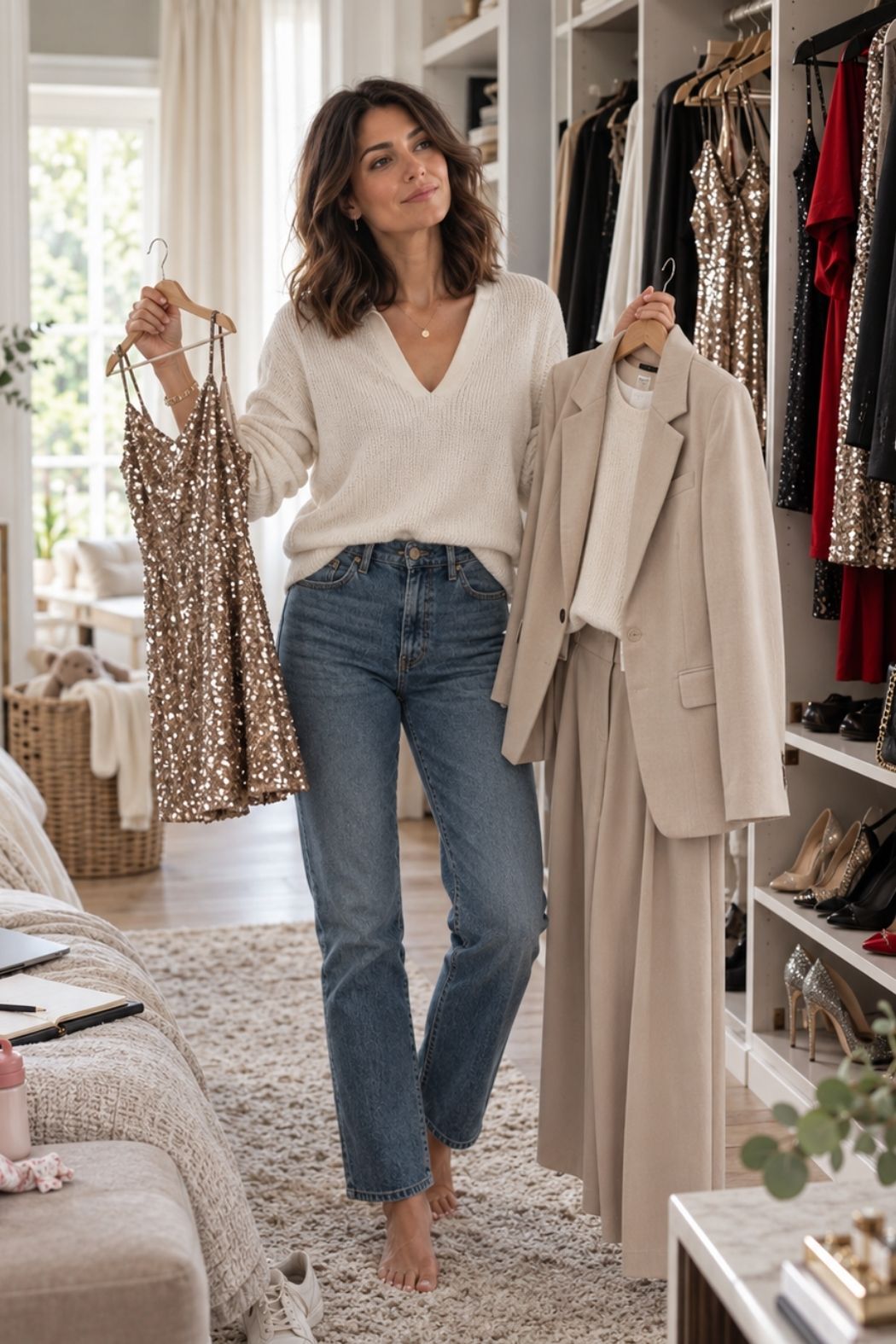
I think this is one of the biggest reasons why we sometimes stand in front of a full closet and say:
“I have nothing to wear.”
The truth is, we often do have something to wear. We just have too many clothes for a life we no longer live. In our twenties, perhaps we went out more often. We moved between school, friends, bars, parties, and spontaneous plans.
After 30, our day may look completely different. Work, children, shopping, sports, meeting friends… And suddenly we need our wardrobe after 30 to handle many more situations.
Maybe we have ten beautiful tops in the closet, but we are missing clothes we can actually wear every day.
Maybe we still own dresses from the time when we went out every Friday night, but today we have many more situations where we want to look put together while still feeling comfortable.
Our style does not change simply because we are getting older. It changes because our real life has changed.
And naturally, we stop wearing clothes that no longer work with that life.
READ MORE:

Fruit Hoodies 30+: The Fall 2026 Trend – 10 Stylish Ways to Wear Fruit Hoodies
3. Our body has changed – and so has the way we see it
Yes, our bodies can change with age. Some women gain weight and others lose it. After having children, our hips, breasts, or waist may change. Our proportions may be different from what they were ten years ago. But I think we sometimes give our bodies much more responsibility for the change than they actually deserve.
“This dress doesn’t look good on me anymore because I’m older.”
But perhaps it isn’t really about age or our body at all. Maybe the way we see our body has simply changed. In our twenties, we may not have minded wearing a very short skirt. After 30, we can absolutely still wear one. We may simply no longer want to spend every five minutes checking how far it has ridden up while we walk. And I don’t think that is a “loss of confidence.” It is simply a different relationship with our own comfort.
And that can naturally lead us toward completely different silhouettes than the ones we loved a few years ago.
4. Our idea of femininity begins to change
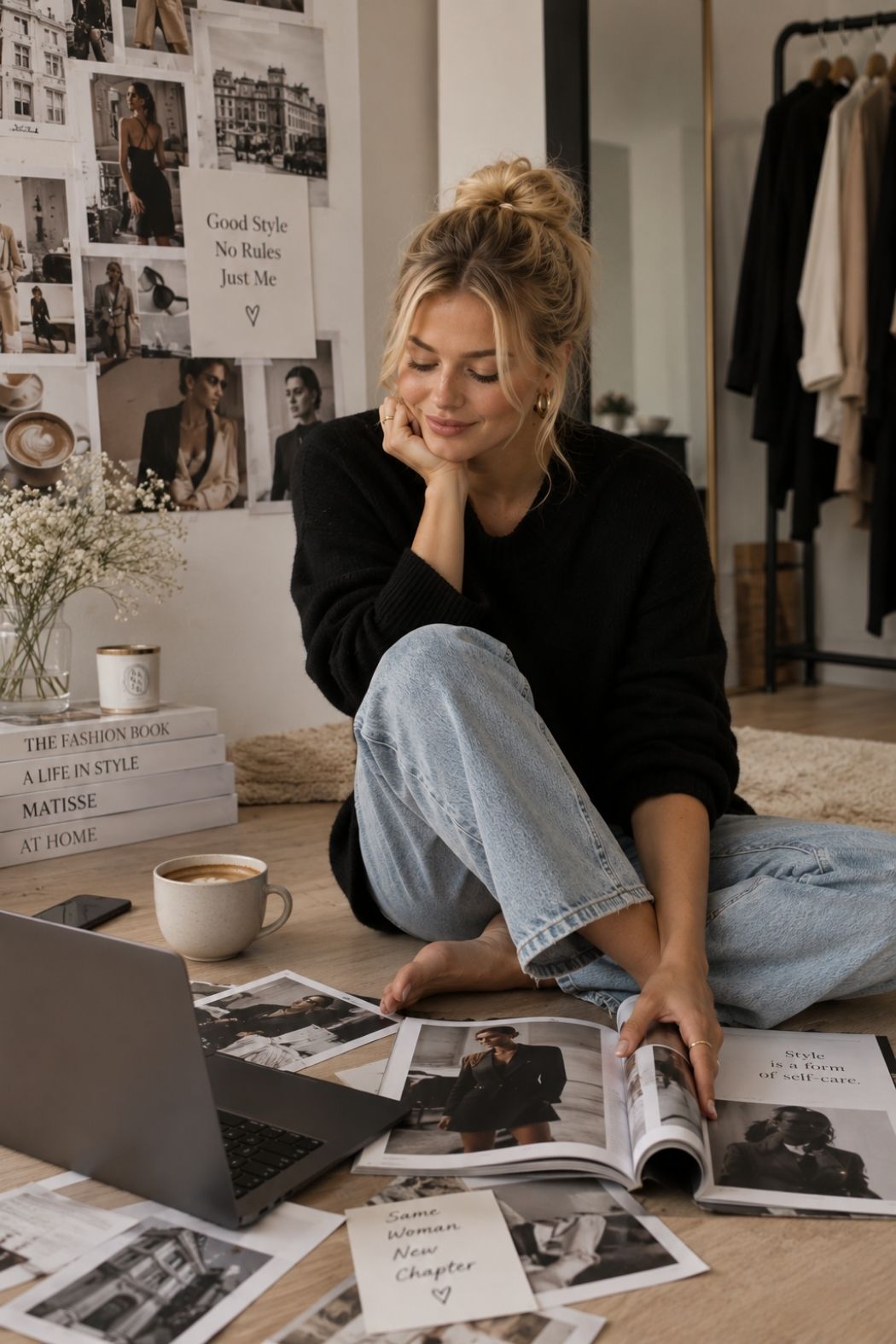
I think this is one of the most interesting changes. In my twenties, I may have associated femininity with a certain type of clothing. Something that attracted attention. And there is absolutely nothing wrong with that. But as we get older, our definition of what it means to feel feminine can change. Suddenly, we may feel beautiful in perfectly tailored trousers and an oversized shirt.
Maybe that is also why some clothes that once felt incredibly sexy suddenly begin to feel a little unfamiliar.
Not because they are “too young.”
But because they no longer reflect the way we see ourselves today.
5. We stop needing every trend
Fashion can be a huge game in your twenties. And I think that is wonderful. New jeans, a new cut, a new trend on TikTok or Pinterest.
We experiment. We search. We copy.
And that is often how we learn about style. But after 30, many of us start becoming much more selective. Not necessarily more conservative. Just more selective.
Instead of asking:
“Is this fashionable?”
we start asking a different question:
“Is this actually me?”
And I think that is one of the best things that can happen in fashion. A trend stops being an instruction. I no longer have to prove that I know what is fashionable right now.
And that is often when our personal style after 30 starts to feel much stronger.
6. The way we want other people to see us changes
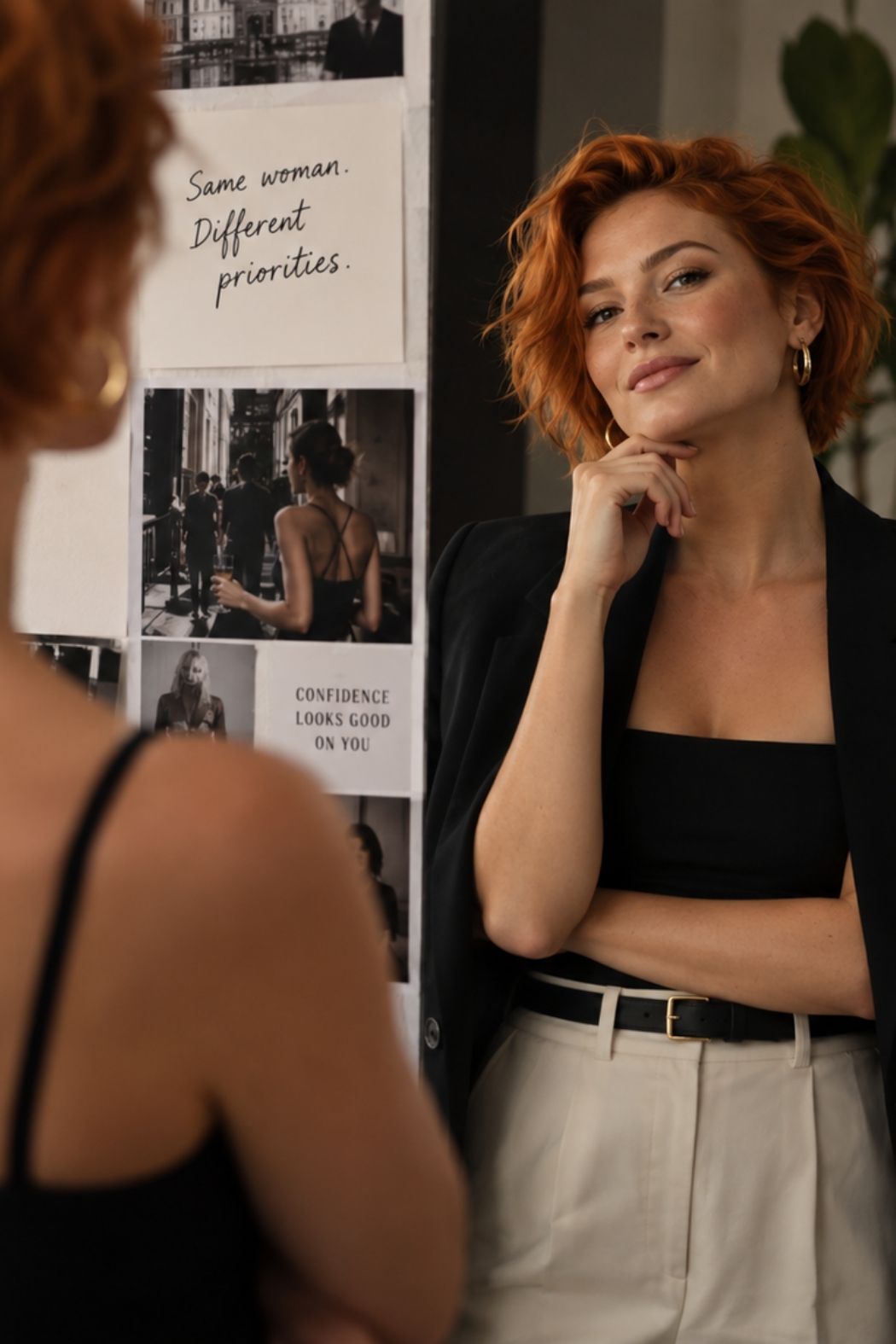
I like to think of clothing as a form of communication. Without saying a single word, we tell people something about ourselves. And what we wanted to communicate in our twenties may not be the same thing we want to communicate after 30. Maybe we once wanted to look mainly sexy. Maybe we wanted to fit in.
Later, we may want to look more elegant. More interesting. More creative. Or still sexy, but in a completely different way.
And there is nothing wrong with any of these versions of ourselves. None is better than another. What matters is whether it still feels like us. That is why an old outfit can suddenly feel strange.
7. We stop dressing for an older version of ourselves
I think this may be the biggest reason of all. Many women have a certain period in their lives when they formed a very strong idea of what made them look their best. Maybe it was at 22. Maybe at 27.
That was when we found the jeans, hairstyle, makeup, or type of dress that brought us compliments. And our brain remembered it.
This works. So we keep doing it. And sometimes we keep doing it for a very long time. But the problem is not that the style itself has become old. The problem is that we have changed in the meantime. And yet sometimes we continue shopping for the woman we were ten years ago. We see a dress and think:
“That is so me.”
We buy it. Bring it home. And never wear it. Because in reality, it isn’t us anymore. It belongs to the woman we used to be. And realizing that can be surprisingly emotional.
Why changing your style after 30 can feel emotional
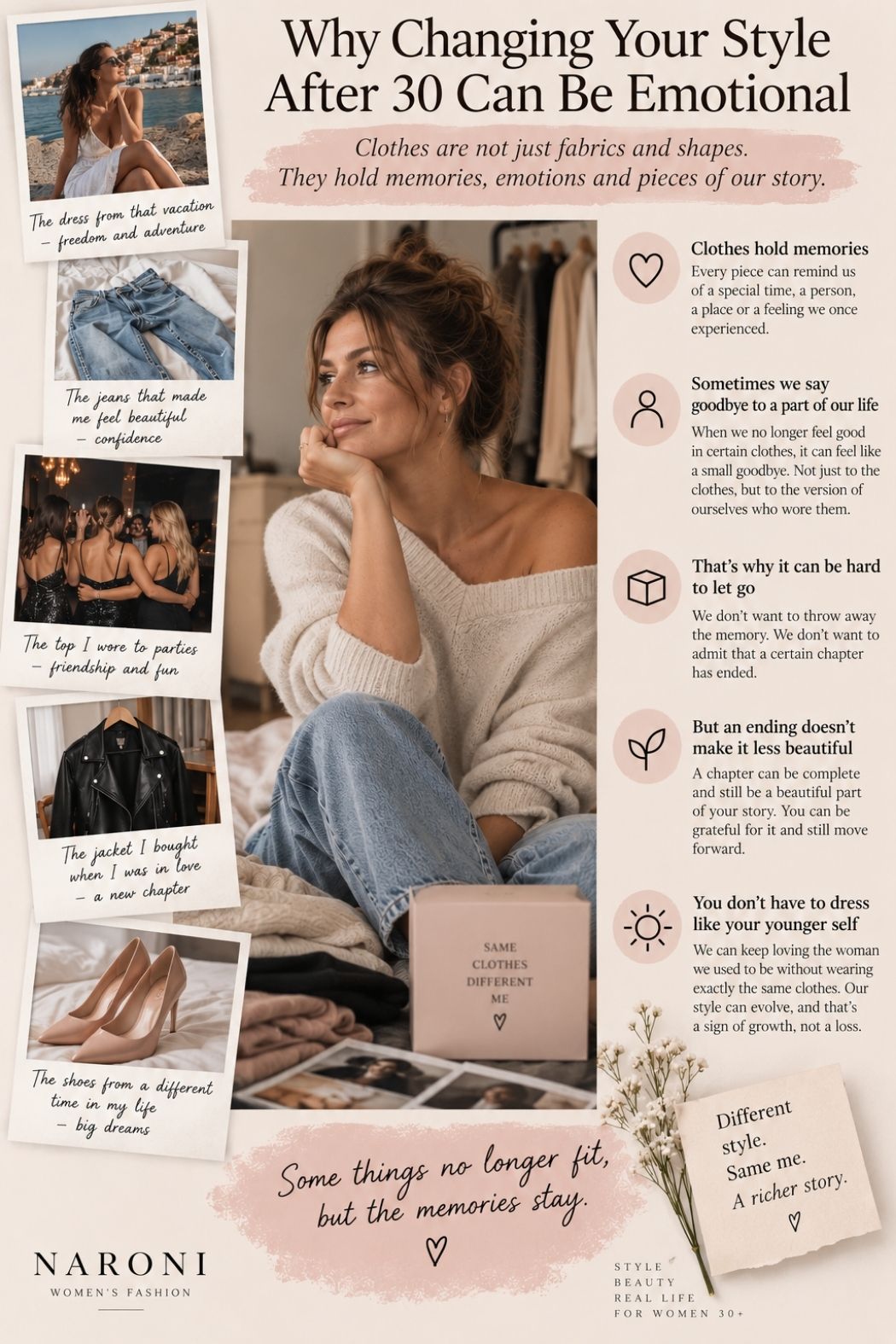
I don’t think we talk about this enough. Clothes hold memories.
The dress from a vacation. The jeans that made us feel beautiful. The top we wore to parties. The jacket we bought when we were in love. The shoes connected to a completely different chapter of our lives.
And when we realize that we no longer feel good in those things, it sometimes isn’t just a fashion problem. It is a small goodbye. Not necessarily to the clothes themselves, but to a part of our life. To the version of ourselves who wore them. And I think that is exactly why we sometimes find it so difficult to let certain pieces go, even when we haven’t worn them for years. We don’t want to throw away the memory. We don’t want to admit that a certain chapter has ended.
But a chapter does not become less beautiful just because it is over. And we do not have to keep dressing like the woman we used to be in order to keep loving her.
Maybe we are afraid that changing our style means getting older
Another thing I think is worth saying out loud is fear. Fashion is strongly connected with youth. Advertising, social media, and fashion campaigns have shown us very young women as the main image of female beauty for a long time. And that is why changing our style after 30 can sometimes feel uncomfortable.
Suddenly we start asking ourselves:
“Do I dress too old now?”
“Do I look too young in this?”
“What are women actually supposed to wear at 30?”
But I think this is exactly where the problem begins. Once we start building our style around our age instead of our personality, we lose the most interesting part of it. Thirty is not a fashion deadline. Neither is forty. A woman does not stop having style simply because she gets older.
And she does not have to prove that she is still young by wearing exactly the same things she wore ten years ago.
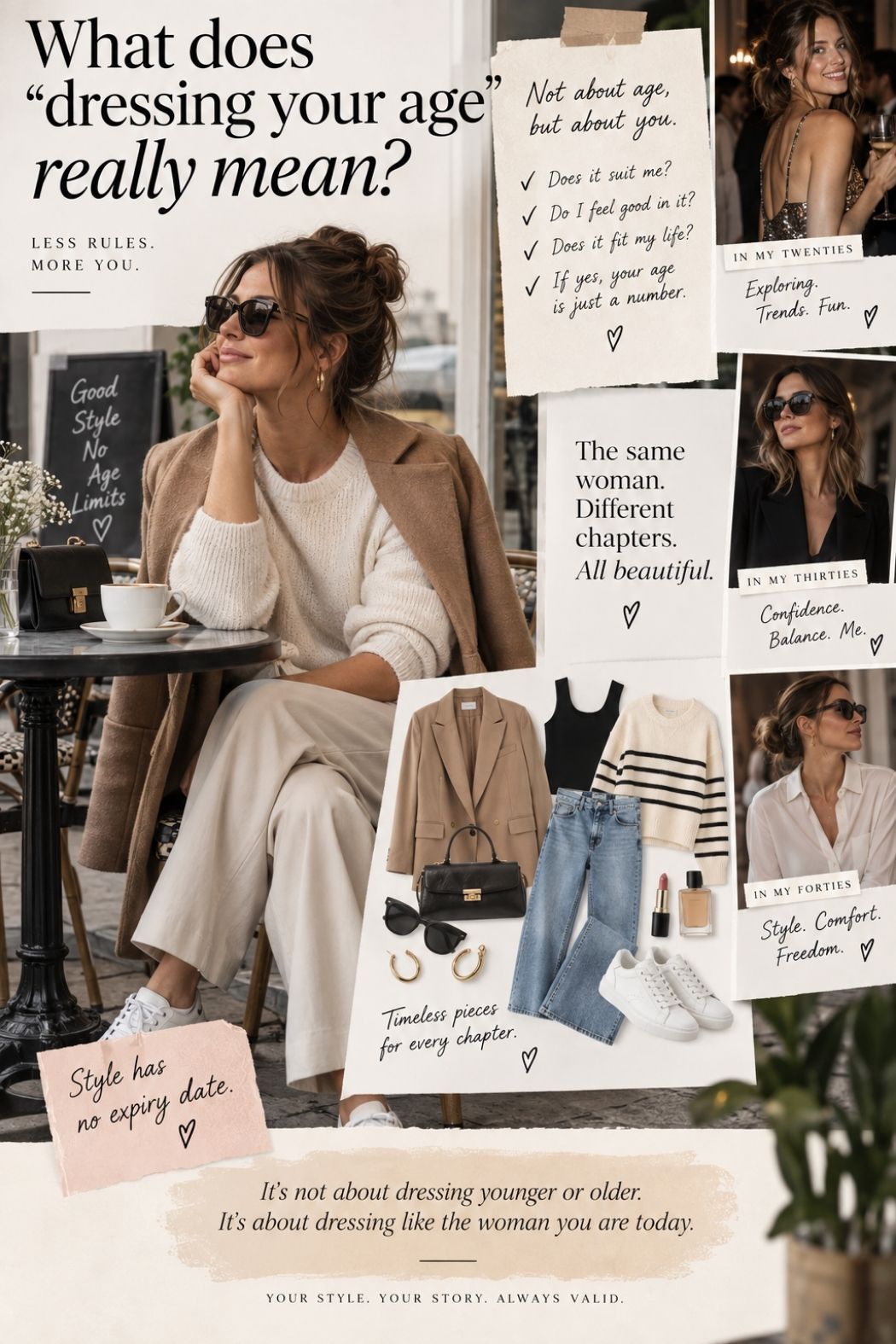
So what does it actually mean to “dress your age”?
Honestly?
I don’t really like that phrase. It often sounds like a list of restrictions. Don’t wear this after 30. Don’t wear that after 40. And definitely don’t wear something else after 50.
But who created these rules?
I think it is much more useful to stop asking:
“Is this appropriate for my age?”
and instead ask:
“Is this right for me?”
Does it fit me?
Do I feel good in it?
Does it fit my life?
If the answer is yes, then I don’t think the number on your ID is the most important thing.
And that is also how I think about how to dress after 30: not as a set of age-based rules, but as learning to recognize what truly feels right for you.
How to tell if your style after 30 has really changed
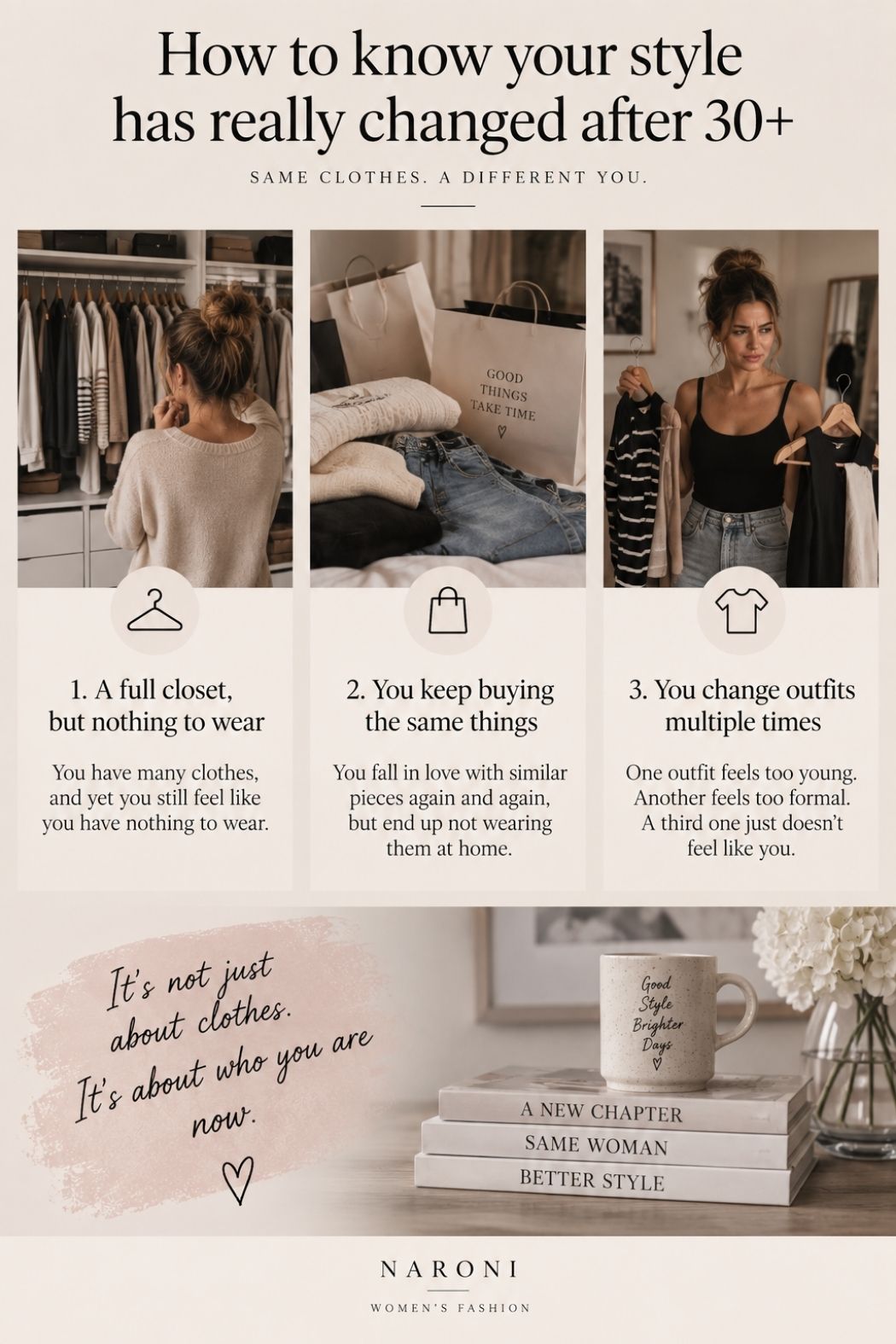
One of the first signs is very simple. You have a full closet. And yet you feel like you have nothing to wear.
Another sign may be that you keep buying the same types of clothes but never wear them once you get home. You fall in love with a dress in a store because it reminds you of something you wore years ago. You buy it. And then it stays hanging in your closet.
You may also notice that you change your clothes several times before leaving the house. One outfit feels too young. Another feels too formal. A third simply doesn’t feel like you at all.
All of this may mean that your current wardrobe no longer completely reflects your current identity.
You don’t have to throw away your entire wardrobe
When you realize your style has changed, you do not need to immediately buy an entirely new wardrobe. Quite the opposite. I would start with what you already have. Look at the clothes you wear again and again. Maybe choose ten pieces that you automatically reach for whenever you don’t know what to wear.
What do they have in common?
Are they simple?
Bold?
Comfortable?
Then look at the clothes you never wear.
And ask yourself:
Why?
Not because you need to judge yourself. But because you want to understand what has changed. Maybe the cut no longer works for you. Maybe it is the fabric. Maybe it is the color.
And maybe the answer is even simpler:
“I just don’t feel like myself in this anymore.”
And that is a completely valid reason.
READ MORE:

Butter Yellow and Lavender Outfits for All 7 Fashion Archetypes
Maybe you don’t need to change your style. Maybe you are finally beginning to find it.
The more I think about it, the more I feel that changing your style after 30 does not have to be a loss at all. Maybe it is exactly the opposite. In our twenties, we experiment. After 30, we start filtering. This, yes. This, no. I love this on other women, but not on myself. I only wore this because everyone else did.
And I think this is where personal style really begins. Not because we have a perfectly curated wardrobe. Not because we know every trend. And certainly not because we follow rules about how to dress after 30. It begins when we can look in the mirror and say:
“Yes. This is me.”
Style after 30 isn’t less fun. It is more ours.
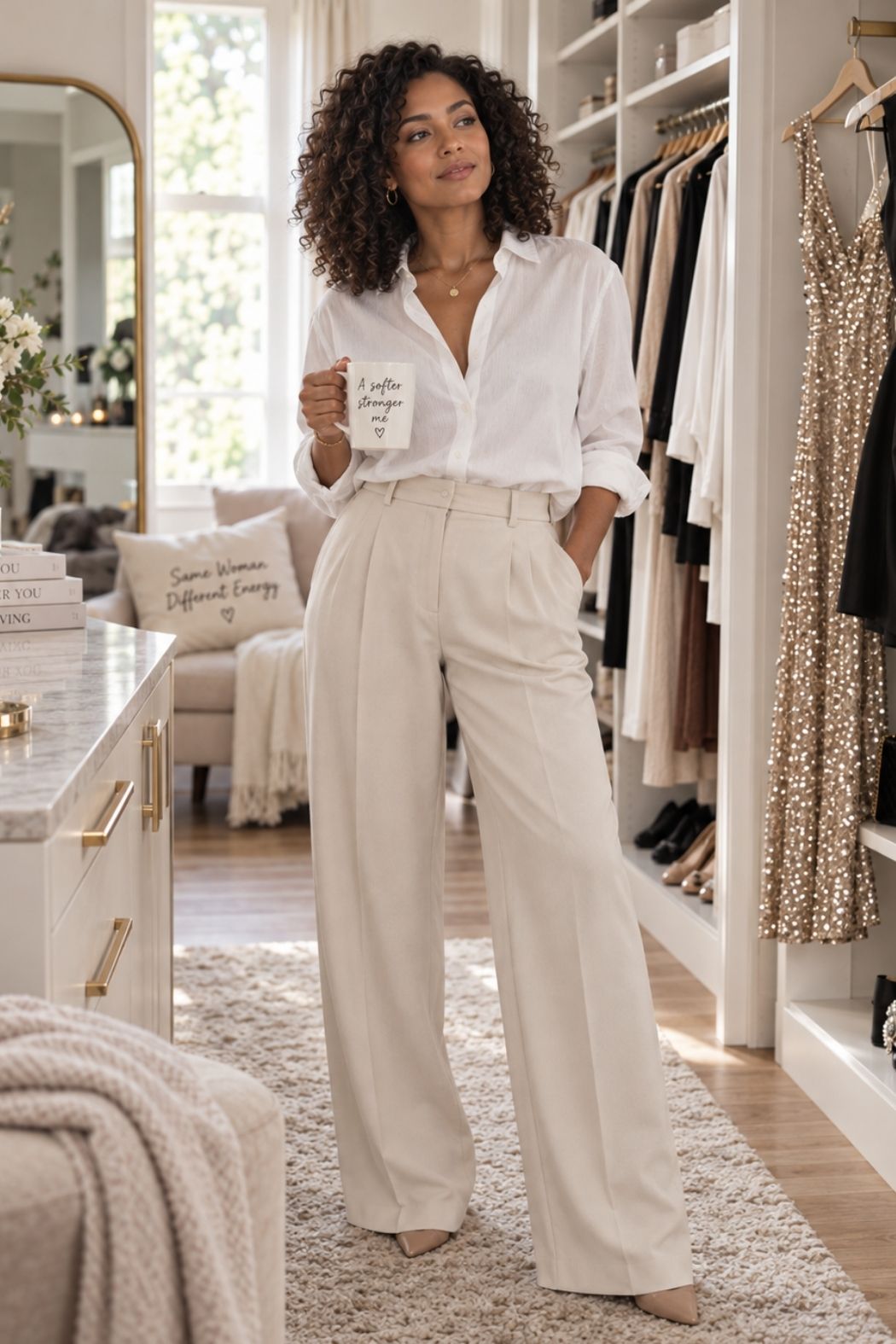
Maybe we will no longer want to wear everything we loved in our twenties. And maybe we will love some of those things just as much. Some things stay. Some leave. Some come back in a different form.
But I think style after 30 has one huge advantage. We begin creating it much more for ourselves. Not for our classmates. Not for men. Not for Instagram. Not because some trend tells us that this is exactly what we are supposed to wear.
We begin to understand that the best outfit is not necessarily the one that gets the most compliments. It is the one that makes you stop thinking about what you are wearing after five minutes. Because you simply feel good in it. And maybe that is the biggest change in style after 30.
We spend less time trying to look like someone else and more time learning how to look like ourselves.
FAQ: Style After 30 and How Our Fashion Changes
Why does style change after 30?
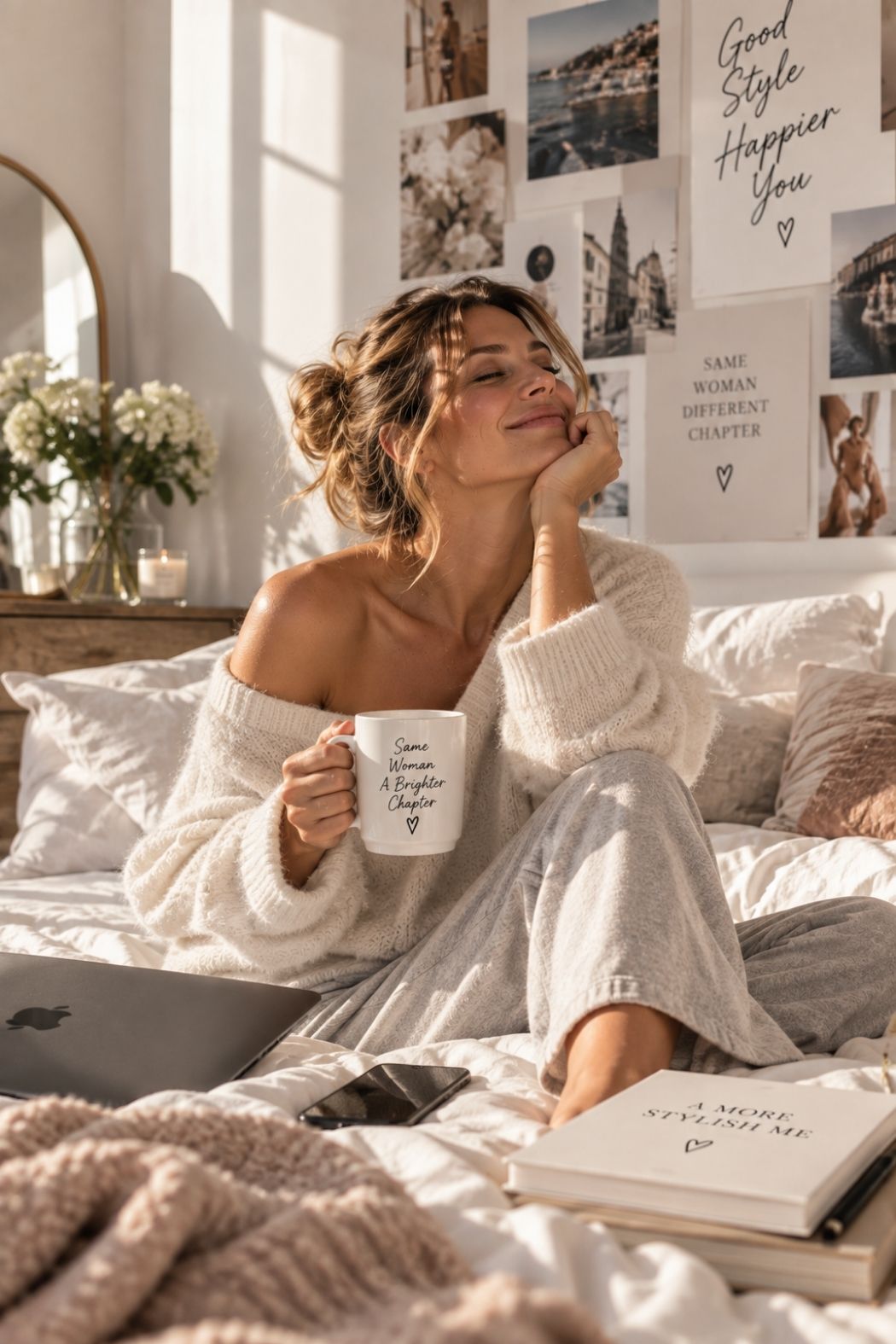
Style after 30 often changes along with our lifestyle, confidence, body, work and family responsibilities, and the way we want to see ourselves. It is not a sudden change caused by turning a certain age. It is usually part of the natural development of our personality, priorities, and everyday life.
Why do I suddenly feel uncomfortable in clothes I used to love?
Often, the clothes themselves are not the problem. Your personality, lifestyle, relationship with your body, or the way you want to present yourself may have changed. Clothes that reflected an older version of you may no longer represent the woman you are today.
What are the 7 main reasons why style changes after 30?
The most common reasons include changing priorities when getting dressed, a different lifestyle, changes in our bodies, a new understanding of femininity, less dependence on fashion trends, a change in how we want other people to see us, and gradually letting go of the older version of ourselves.
READ MORE:

5 Sweater and Jeans Outfits for Women Over 30: Fall 2026 Outfit Ideas for the Friend Archetype
Is it normal to feel like I have nothing to wear after 30?
Yes. Having a full closet while still feeling like you have nothing to wear can be a sign that part of your wardrobe after 30 still belongs to an earlier chapter of your life or an older version of your personal style.
What should a woman not wear after 30?
There is no universal list of clothes women should stop wearing after 30. Your personality, lifestyle, environment, comfort, and how you feel in your clothes matter much more than your age.
Does a woman have to start dressing more elegantly after 30?
No. Some women naturally begin to prefer a more elegant or simple style, while others remain sporty, romantic, bohemian, bold, or eclectic. Fashion after 30 is not one specific way of dressing.
How do I know if my personal style has changed?
Common signs include changing your outfit several times before leaving the house, feeling like you have nothing to wear despite having a full closet, buying clothes that you never actually wear, or realizing that some of your old favorite pieces simply no longer feel like you.
Do I need to replace my entire wardrobe when my style changes?
No. Start by looking at the clothes you already own. Pay attention to what you wear most often and why. This can show you how your personal style after 30 is naturally evolving.
How do I find my personal style after 30?
Start with your real life. Focus on the clothes you genuinely enjoy wearing, the cuts and colors that make you feel good, and the pieces that work for your everyday needs. Inspiration can help, but your personal style should ultimately come from you.
Is it normal to feel a little sad when my style changes after 30?
Yes. Clothes can be deeply connected to memories and different stages of our lives. Realizing that certain pieces no longer feel right can feel like saying goodbye to an older version of yourself. But that does not mean you are losing her. It simply means your life is moving forward.
READ MORE:
Pear Body Shape: How to Dress for It (Simple Style Tips That Actually Work in 2026)
10 Monochrome Neutral Outfit Ideas for Women That Always Look Chic (Effortless City Style 2026)